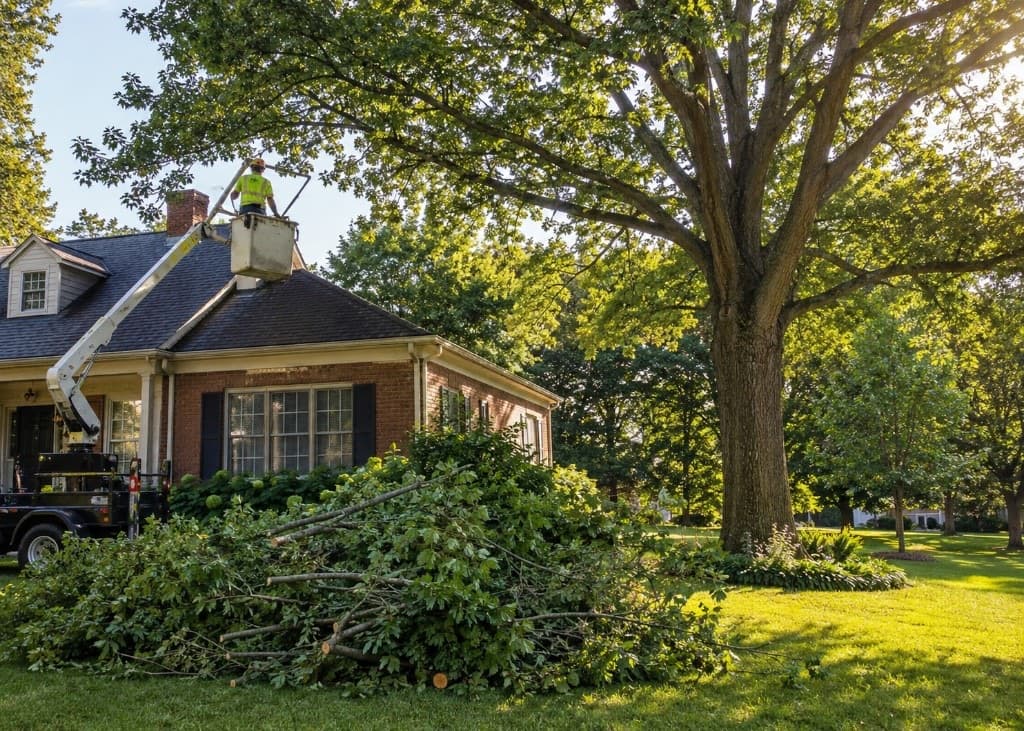
Tree trimming in Shawnee is often about living with large trees on modest lots: limbs over the roof, branches crowding the driveway, or a canopy that turned wild after a few skipped seasons. Done correctly, trimming improves clearance and removes weak growth without harming the tree — not the blunt “topping” that creates weak sprouts and bigger problems later.
Trimming vs. pruning — what you actually need
Whether you call it trimming or pruning, the goal is the same: remove dead wood, improve structure, and create clearance from roofs, chimneys, and lines of sight. We explain the cuts in plain language so you know what’s coming off and why.
When is the best season to trim trees in Shawnee?
Late winter and early spring are popular for many deciduous trees here — you can see structure clearly, and the tree isn’t carrying a full leaf load. That said, don’t wait on a hanging limb or storm-split branch because the calendar isn’t “ideal.” Safety overrides season.
Book a trim estimate — (913) 914-8935
What kind of clearance does your tree need?
Clearance trimming creates practical space without stripping the canopy. That may mean lifting low branches over a driveway, keeping limbs from rubbing the roof or chimney, opening a blocked sightline, or cutting back growth that crosses a fence. The goal is enough lasting clearance for the problem at hand while keeping a balanced tree.
Crown cleaning removes dead, broken, and weak branches. Selective thinning reduces crowded growth, while crown raising removes lower limbs for clearance. We'll use plain language during the estimate and point out which cuts solve the problem you called about.
Storm prep and overgrown canopies
Ice and wind are regular visitors in Johnson County. Reducing sail on end-heavy limbs and clearing weak wood before storm season is one of the smarter maintenance moves for pin oaks and similar canopy trees. If the tree is already failing, we’ll talk tree removal instead of false hope from a light trim.
When is trimming not enough?
Trimming cannot correct every structural problem. A mostly dead tree, a trunk with major decay, or a root plate that shifted after a storm may remain dangerous even after branches are removed. In that situation, we'll explain why tree removal is the safer recommendation instead of selling a temporary trim.
After sudden limb loss, you may need emergency tree service. If a removal leaves a stump in the lawn, stump grinding finishes the job. Questions? Call (913) 914-8935.