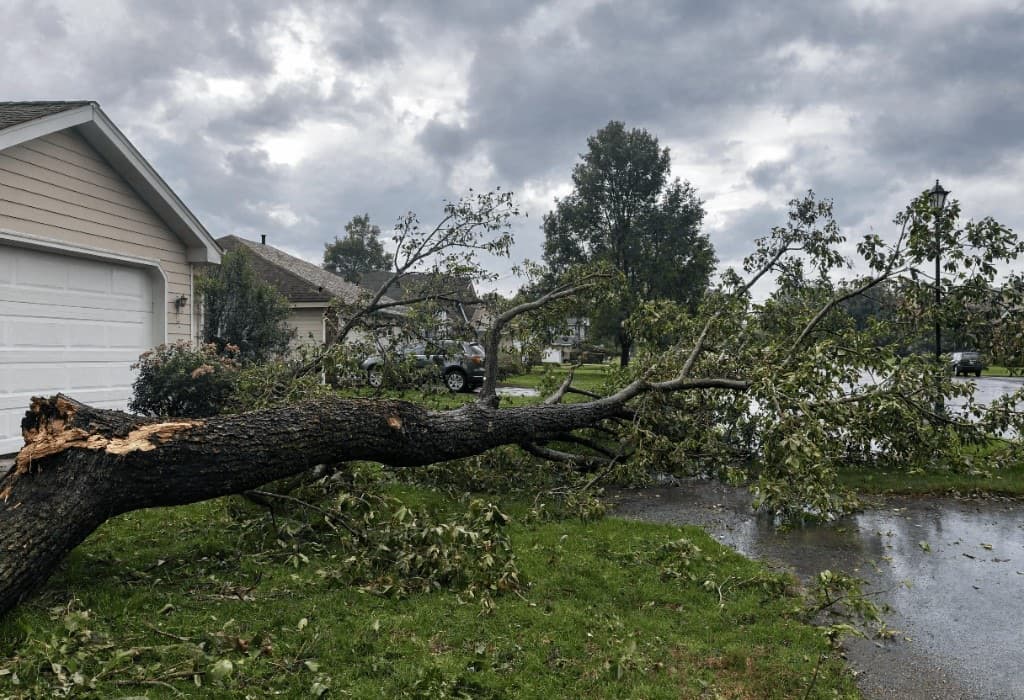
When a tree fails in Shawnee, the priority is people and the structure — not a perfect landscape finish on day one. Emergency tree service means making the site safe: clearing access, removing weight from the roof, and dealing with hangers that could still drop. Full cleanup and stump work can follow once the urgent risk is handled.
Call before you climb
Ice storms and straight-line winds leave tempting DIY moments — chainsaw in hand, limb on the fence. Partially failed trees are unpredictable. Call (913) 914-8935 first. If utilities are down or tangled in the canopy, contact the power company before any cutting near lines.
Emergency line — (913) 914-8935
What should you tell us when you call?
Give us the property address, what failed, and what the tree or limb is resting on. Mention downed wires, a blocked driveway, roof damage, or anything still hanging overhead. Photos can help if you can take them from a safe location, but do not walk under a damaged canopy to get a better angle.
Those details help us understand whether the first job is clearing access, taking weight off a structure, or securing a dangerous hanger. If emergency services or the utility need to act first, we'll tell you.
What we handle after storms
Trees on houses or garages, blocked driveways, large limbs through fences, and dangerous hangers over walkways. We’ll stabilize and remove what’s threatening, then talk through whether you need full tree removal, cleanup trimming, or stump grinding as a follow-up.
Does the tree need emergency service?
A tree on a home or vehicle, a blocked exit, exposed utilities, or a large hanger over an occupied area should be treated as urgent. Small broken limbs lying safely in the yard and cosmetic canopy damage can usually be scheduled as normal trimming or removal. Calling helps us triage the situation without asking you to inspect an unstable tree yourself.
Availability changes during metro-wide storms, when many properties may need help at once. We'll give you a realistic answer about timing and focus first on reducing the immediate danger. Finish work, full removal, and stump grinding can be planned after the site is safe.